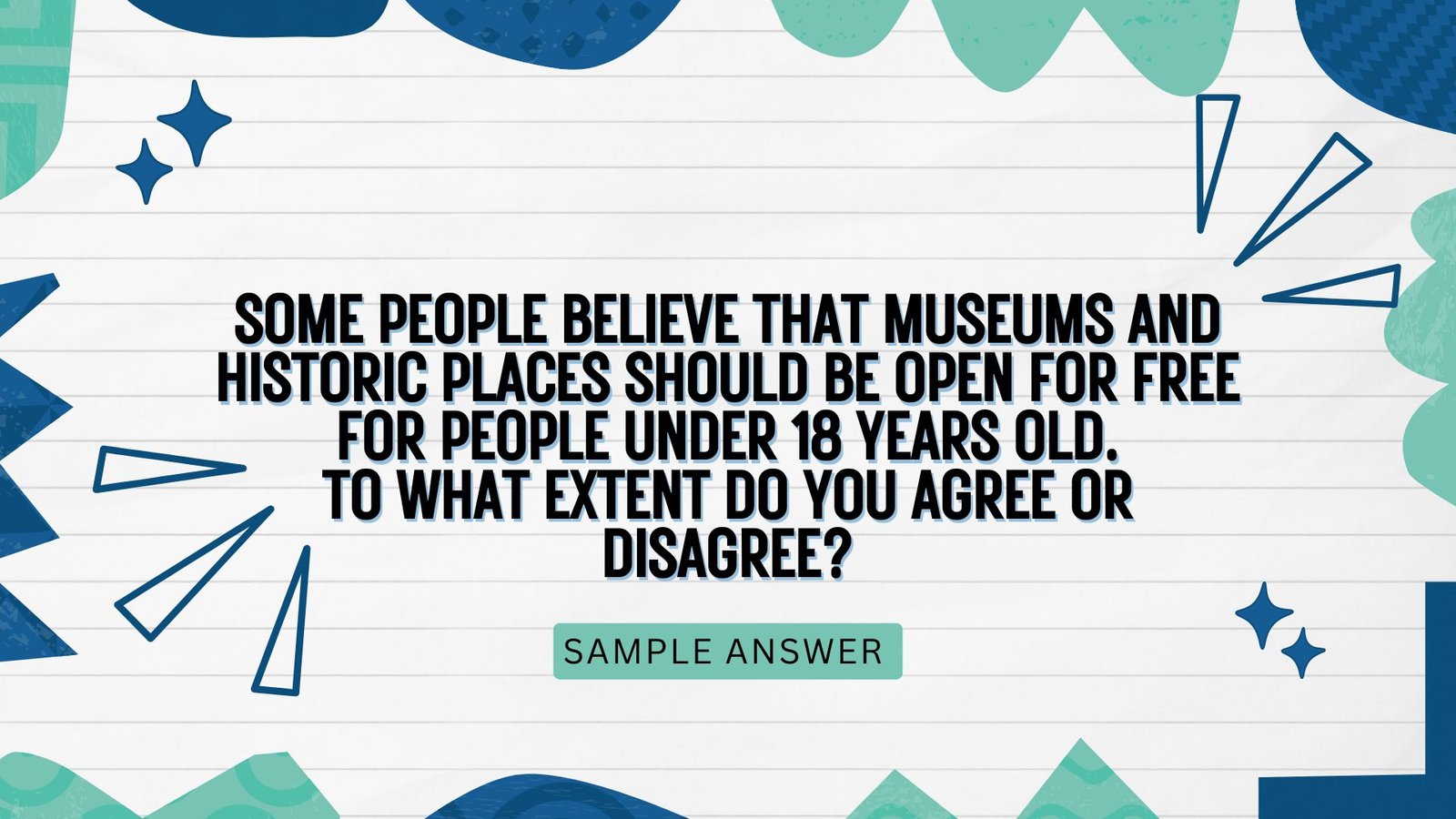
It is often argued that museums and historic sites should provide free entry to individuals under the age of 18. I strongly agree with this viewpoint, as it promotes education and encourages cultural awareness among young people.
One of the main reasons for offering free access to minors is that it enhances their educational development. Museums and historical places serve as valuable sources of knowledge, allowing young individuals to learn about history, art, and culture in an engaging and interactive way. Unlike traditional classroom learning, these environments provide practical exposure, which can significantly improve understanding and retention. As a result, free entry would motivate more students to visit such places and broaden their intellectual horizons.
Another important benefit is that it fosters a sense of cultural appreciation and national identity among the younger generation. When children are exposed to historical artefacts and heritage sites, they develop a deeper connection with their country’s past. Although some may argue that free entry could lead to financial losses for these institutions, this can be offset by government funding or increased ticket prices for adults. Therefore, the long-term benefits of educating young citizens far outweigh the potential drawbacks.
In conclusion, providing free access to museums and historic places for those under 18 is a highly beneficial policy. It not only supports educational growth but also helps cultivate cultural awareness, making it a worthwhile investment in the future generation.
High-Level Vocabulary & Collocations
argued that
provide free entry
promotes education
cultural awareness
educational development
valuable sources of knowledge
interactive learning
intellectual horizons
cultural appreciation
national identity
historical artefacts
long-term benefits
worthwhile investment